Shortly after his arrival in New York 1882 for his Lecture Tour, Oscar Wilde posed for a series of photographs taken by Napoleon Sarony, who was at the time the most famous portrait photographer in America.
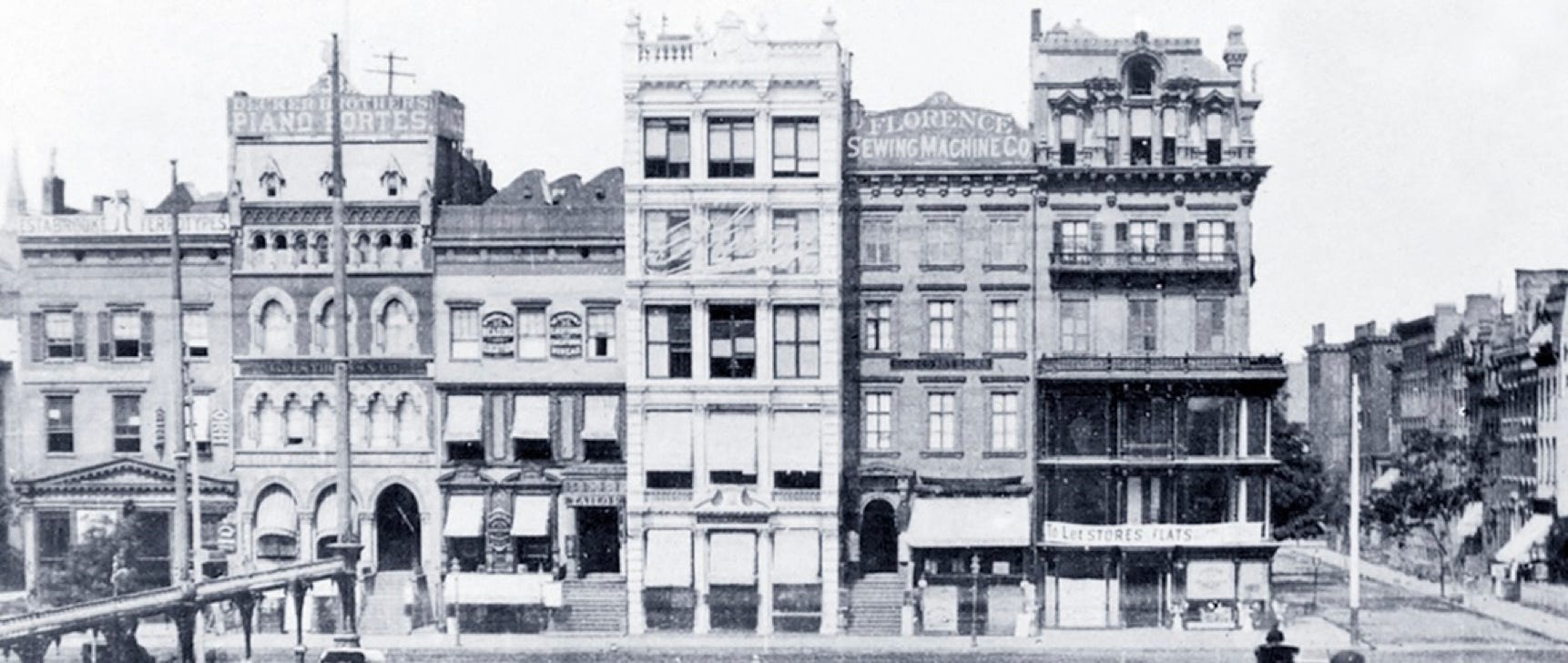
The majority of the photographs were taken on January 5th, 1882 at Sarony's studio at 37 Union Square, New York City. Wilde revisited the studio later in the year for four more photographs; and again in the late Summer of 1883 on a return visit to America when Sarony took three more known photographs, this time with Wilde's hair cut much shorter.
The photographs have come to form the most recognizable image of Oscar Wilde, and are the ones we most readily associate him with today. This archive is the only place in mass publication where all known Sarony images of Oscar Wilde appear together.
Number of Photographs
The total number of known Sarony images of Oscar Wilde is 32. However, arriving at this number has been a growth industry.
It had been historically cited that there were 27 Sarony photographs of Oscar Wilde from 1882. Indeed, this is the number illustrated in Merlin Holland’s excellent little book The Wilde Album. [Henry Holt, 1998]. However, that author (Oscar Wilde’s grandson) was wise to provide the caveat that there were “at least” 27. Wise because the book ignores one of TWO photographs designated as number 9. These two number 9s are extremely similar and could easily be mistaken for each other when not viewed together. But in one Wilde is holding a book (his Poems, 1881) and in the other he is not. They are included in this archive as photographs 9A and 9B.
The two numbers 9s would have made 28. However, recently a rarely seen photograph in the extensive Wilde holdings at the Harry Ransom Center, The University of Texas at Austin, was identified as a Sarony, and verified by Merlin Holland. The reason for its rarity is that this unnumbered image was almost certainly not one of the commercial Sarony series; moreover, the copy in the Ransom collection might be the only extant proof print. It is included in this archive as photograph 3A.
The relatively recent identification of Sarony 3A brings to 29 the total of photographs of Wilde from 1882. To these we can add another three known photographs taken by Sarony in 1883 of Wilde with shorter hair.
Finally, we arrive at the current total of 32 .


Oscar Wilde In America | © John Cooper, 2024


