In 1885 Wilde attended a controversial auction in London of Keats ephemera.
On that occasion he wrote the following sonnet:
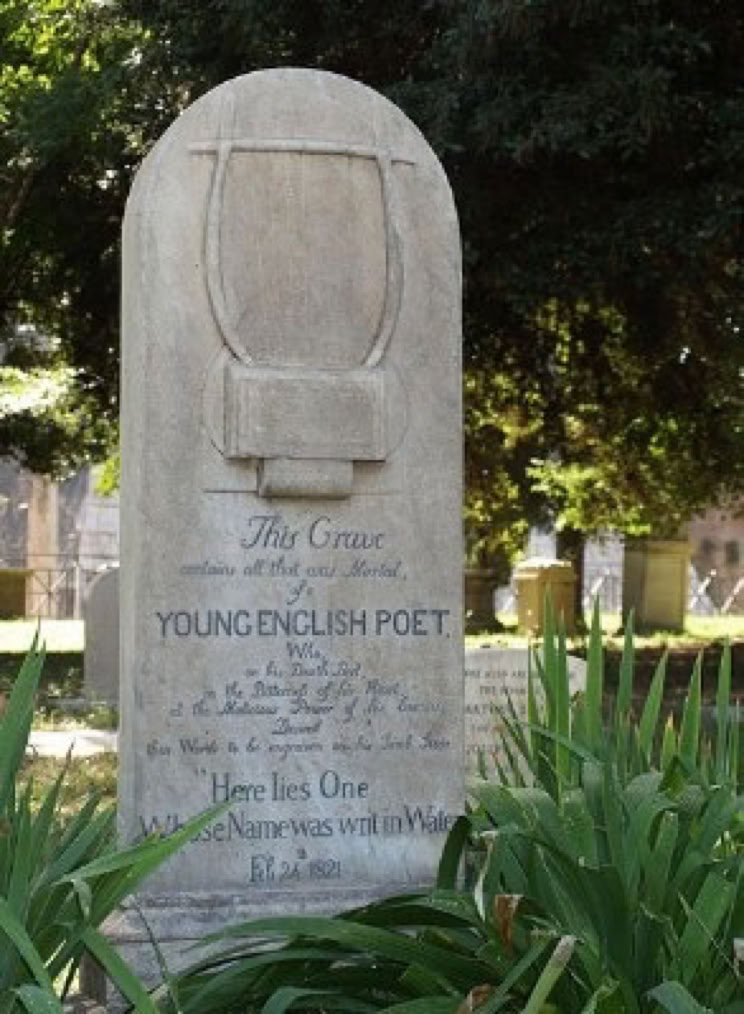
On the sale by auction of Keats’ love-letters
[1] 'Article: The Tomb of Keats', The Irish Monthly, July 5, 1877, 476-8.
The Grave of Keats.
by Oscar Wilde
Rid of the world’s injustice, and his pain,
He rests at last beneath God’s veil of blue:
Taken from life when life and love were new
The youngest of the martyrs here is lain,
Fair as Sebastian, and as early slain.
No cypress shades his grave, no funeral yew,
But gentle violets weeping with the dew
Weave on his bones an ever-blossoming chain.
O proudest heart that broke for misery!
O sweetest lips since those of Mitylene!
O poet-painter of our English Land!
Thy name was writ in water——it shall stand:
And tears like mine will keep thy memory green,
As Isabella did her Basil-tree.
View the original article in The Irish Monthly.
[2] The nomenclature 'Sonnet in Blue' is referential, not an actual title. The allusion is to the poem's opening word and its subject which is the color of the sea and the sky. The actual poem may be untitled and goes by the name Answer to a Sonnet Ending Thus:-, meaning a response to another sonnet by J. H. Reynolds ending: "Dark eyes are dearer far/Than those that mock the hyacinthine bell."
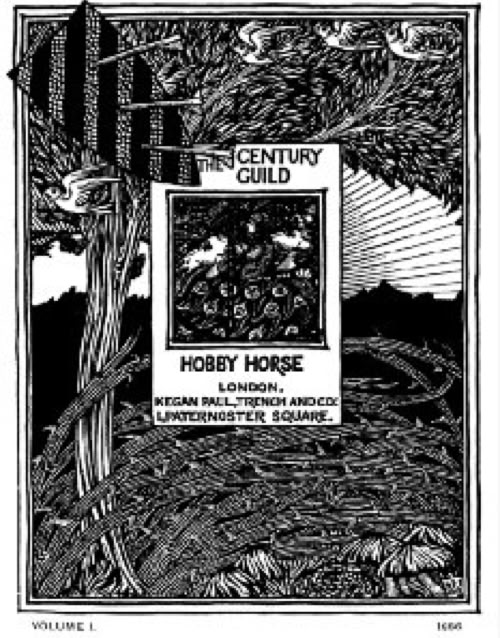
[3] The Hobby Horse: the magazine ran from 1884–1894 and spanned a total of seven volumes and 28 issues. The Wilde article was in the July 1886 issue, pp 83-6. Reprinted in Miscellanies.
Read Wilde's article as originally published in The Hobby Horse.
[4] Letters, 157.
[5] Dramatic Review, January 23, 1886, 249.